


The conversation around AI for events often moves between two extremes: excessive enthusiasm and complete scepticism. On the one hand, it is presented as a technology capable of completely transforming the industry. On the other, it is perceived as just another trend, full of promises that are difficult to translate into the daily work of an event organiser.
The reality sits in a much more useful middle ground: artificial intelligence does not solve the complexity of events on its own, but it can significantly improve specific processes and multiply the operational capacity of teams.
This is precisely the most interesting starting point. Talking about AI for events should not mean imagining futuristic scenarios, but identifying tasks, decisions and workflows that can already be optimised today. AI can bring speed, synthesis, personalisation and pattern recognition. However, its value does not appear automatically simply by using a tool: it emerges when it is connected to a clear objective and supported by a solid data foundation.
Therefore, the key question is not whether organisers should use AI — our answer to that is unequivocal. The real question is: where does it generate the most meaningful impact? Not all applications are equally mature, and not all deliver the same return.
Some uses are immediate and accessible, such as content generation or feedback analysis. Others require stronger data infrastructure, such as recommendation personalisation or predictive analytics. Understanding this difference is essential to building a coherent and effective strategy.
There is also an important shift that organisers should begin to consider: the evolution from isolated AI uses towards more connected models in which different systems work together in a coordinated way. This includes everything from tools that generate content or analyse feedback to environments where AI can trigger actions, consult multiple sources of information and support decision-making within broader workflows.
In this context, concepts such as AI agents and system orchestration are starting to gain relevance. This is no longer a distant promise but an increasingly realistic step in how technology will support event operations.
In this blog post we explore eight practical applications of AI for events, focusing on what problems they solve, the value they bring, their limitations, and why they can become a competitive advantage when integrated effectively into the overall event strategy.


1. Content generation for event promotion
Content creation is one of the areas where AI for events delivers the most immediate impact. The reason is simple: event marketing requires producing large volumes of content in a short time across multiple channels.
A single event may require emails, social media copy, landing page text, paid campaign messages, session descriptions, internal communications and post-event content. In many teams, this pressure falls on only a few people, affecting both the speed and consistency of communication.
Here, AI does not replace strategy or editorial judgement, but it acts as an accelerator. It helps generate first drafts, adapt messaging for different audiences and create variations for testing subject lines, CTAs and messaging angles.
Its real value is not in “writing on its own”, but in reducing start-up time and expanding creative options. This becomes particularly useful when event promotion intensifies as the event date approaches and teams must respond quickly.
From an analytical perspective, this application also reveals something important: it forces teams to clarify the event’s positioning. If an AI tool receives vague instructions, it produces generic messages. If it receives a solid brief — including audience, value proposition and tone — the results improve dramatically.
However, one caution is necessary. The most common risk is ending up with overly flat, interchangeable or indistinct messaging. If all organisers use basic prompts, they will all sound similar. The real advantage comes from a clear brand voice combined with human editing that adds context, judgement and personality.
Act as a B2B event marketing specialist.
Write three versions of an invitation email for an event aimed at marketing directors.
The first should focus on networking, the second on learning, and the third on innovation.
Include subject line, preheader and CTA.
Example prompt
2. Intelligent audience segmentation
One of the most common problems in marketing — and in event marketing in particular — is treating the entire database as if it were homogeneous.
When this happens, campaigns lose relevance, conversion decreases and one of the event channel’s greatest strengths is wasted: its ability to connect with very specific interests and needs.
In this area, AI for events can help identify patterns within audiences and build more meaningful segments than traditional criteria.
Unlike manual segmentation, AI can analyse multiple variables quickly: job role, industry, attendance history, digital behaviour, declared interests or engagement with previous campaigns.
This improves precision and may reveal groupings that were not obvious at first glance. For example, attendees who do not share an industry but attend for similar motivations such as inspiration, networking or the search for practical solutions.
Better segmentation does not only improve message personalisation. It also helps organisers understand the role that the event plays for different attendee profiles.
This knowledge can influence the value proposition, the agenda, featured content and even pricing strategies. A well-segmented audience improves marketing decisions and also informs event design.
However, the quality of the outcome depends entirely on the quality of the available data. If the database is outdated, incomplete or poorly structured, AI will amplify that disorder rather than solve it.
This is a powerful application, but it also reveals an important truth: artificial intelligence does not compensate for poor data management.
Salesforce reported in 2023 that 51% of the marketers surveyed were already using generative AI, while another 22% planned to start using it soon.
McKinsey states that 88% of respondents say their organisations use AI regularly in at least one business function, compared with 78% the previous year.
3. Chatbots to answer attendee questions
Attendee support is often one of the least visible but most critical aspects of the event experience.
An unanswered question can quickly become friction: registration problems, schedule confusion, logistical uncertainty or a perception of disorganisation.
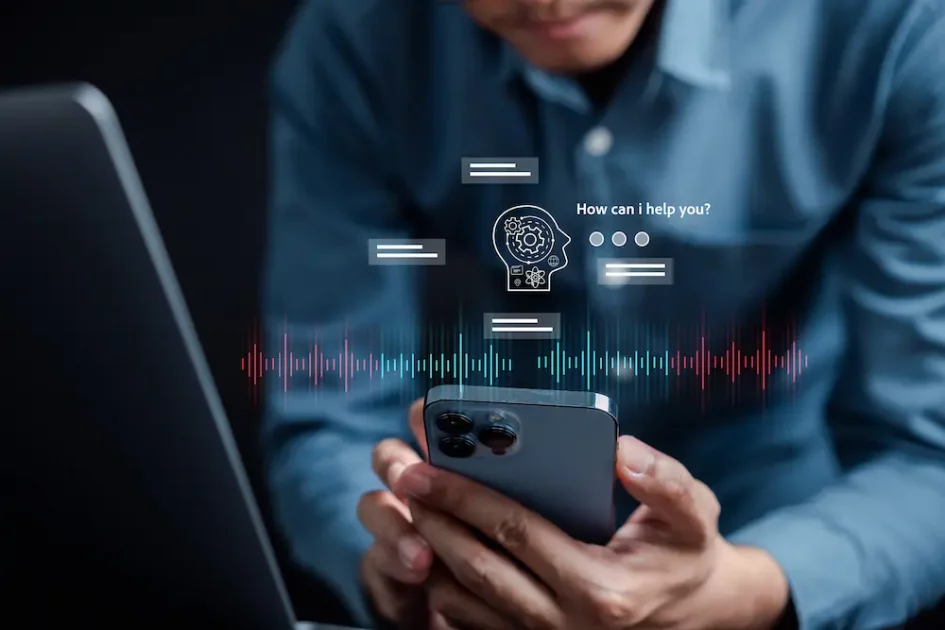
AI-powered chatbots can act as a first support layer that absorbs a large portion of repetitive questions.
Their value lies not only in responding quickly but in doing so at scale. As event attendance grows, the volume of questions grows exponentially.
A system capable of answering frequent questions immediately frees the team to handle more complex or high-value issues. In this sense, AI does not only reduce operational workload — it protects the attendee experience.
Additionally, a well-designed chatbot becomes a valuable data source. It helps identify the most frequent questions, where friction appears in the attendee journey and what information is not being communicated clearly.
However, its effectiveness depends on the quality of its knowledge base. If the chatbot does not have access to updated information about the agenda, venue or changes, it may generate frustration rather than solve problems.
For this reason, it should not be presented as a magic solution but as part of a broader support strategy that includes human oversight and continuous updates.

4. Personalising the attendee agenda
When an event programme includes a large number of sessions, workshops and activities, abundance can easily turn into overload.
When attendees face dozens of options, decision fatigue can reduce satisfaction and lead to a less relevant experience.
Here, AI for events offers an important opportunity: turning a generic agenda into a personalised experience.
Using data about interests, professional roles, behavioural history or stated preferences, AI can recommend sessions, meetings or itineraries that better match each attendee profile.
This increases perceived relevance and can improve session attendance and overall event value.
However, personalisation should not be understood only as convenience for the attendee. It can also be used strategically to distribute attention more effectively across the event.
It may help balance session capacities, highlight overlooked content and strengthen the connection between knowledge supply and attendee demand.
Again, this application demonstrates that AI depends on digital maturity. Better recommendations require better data collection and structuring.
5. Automated analysis of event feedback
Post-event feedback is one of the most valuable learning sources for organisers, yet it is often underused.
Organisers frequently collect dozens or hundreds of open responses that end up being reviewed superficially or summarised into general impressions.
AI can change this by allowing large volumes of feedback to be analysed quickly and systematically.
Its value is not only summarisation but pattern detection: identifying recurring themes, positive highlights, sources of frustration and differences between attendee groups.
This produces a much richer layer of insight than manual reading of isolated comments.
Furthermore, AI-analysed feedback can inform decisions beyond the post-event report. It can guide choices around content, formats, onsite experience, communication or segmentation for future editions.
In other words, it transforms what is often considered a “closing phase” into a strategic input for the next event.
However, interpretation remains essential. AI can classify and detect trends, but it cannot replace the organiser’s judgement when deciding which actions to prioritise.

6. Automatic creation of event summaries with AI for events
After the event, a second important phase begins: redistributing the knowledge generated during the event.
AI makes it easier to create session summaries, learning highlights, post-event newsletters and content for blogs or social media.
Operationally, this saves time and helps keep the event alive beyond the event date.
Strategically, it extends the value cycle of the content and supports follow-up actions such as nurturing, brand positioning or demand generation.
In other words, it transforms the event from a one-off moment into a long-term content asset.
However, without human supervision, summaries may become overly flat. AI can synthesise efficiently but may lose nuance or context.
The best approach is to use AI as a first draft that the team refines into meaningful content.
7. Predicting attendee behaviour
Among the more advanced applications of AI for events, predictive analytics is one of the most promising.
Instead of simply describing what has happened, it attempts to anticipate what might happen:
- who is most likely to attend
- which attendees may cancel
- which sessions will attract the most demand
- which audience segments respond best to certain campaigns.
This is particularly valuable in an environment increasingly defined by last-minute behaviour, both in registrations and sponsorship agreements.
Predictive insights can help organisers adjust capacity, catering, staffing and onsite resources. In marketing, they can optimise campaigns and reinforce actions targeting high-conversion profiles.
However, predictive models must be treated carefully. They are not neutral or infallible. They depend on historical data, data quality and contextual interpretation.
The goal is not to claim that AI “knows the future”, but to work with better-informed probabilities that reduce uncertainty.
8. AI agents and system orchestration: the next practical step
As the use of AI in events matures, a more sophisticated scenario begins to emerge: moving beyond isolated tools and connecting AI capabilities across systems and workflows.
This is where AI agents and system orchestration come into play.
An AI agent can interpret a goal, access available information, execute a sequence of actions and propose or trigger decisions within defined limits.
In an event context, this could mean assistants that not only answer questions but also access the event knowledge base, retrieve CRM data, detect recurring issues or help prioritise operational actions.
Orchestration refers to how the different systems involved in an event ecosystem connect and coordinate: event platforms, CRM, email marketing tools, analytics systems, content repositories or support systems.
In practice, this means that the value of AI no longer depends solely on one tool but on how information flows between systems and how decision workflows are designed.
For organisers, the implication is clear: the next stage of AI adoption is not just faster content generation or better analytics, but building processes where technology supports the team across multiple functions.
This requires governance, structured data, reliable integrations and a clear definition of which decisions AI can support and which must remain under human control.
Talking about AI agents in events today is not science fiction. It is a working model that becomes viable when a solid technological foundation exists.
Conclusion
AI for events creates real value when it moves beyond abstract promises and starts addressing concrete operational challenges.
Its greatest potential is not to impress, but to make processes more agile, more intelligent and more data-driven.
At the same time, it is important to avoid oversimplification. AI does not replace strategy, does not automatically fix poor data quality and does not substitute the judgement of those who design the event experience.
What it does is expand the team’s capabilities: enabling faster production, deeper analysis, more precise personalisation and better detection of patterns.
For many organisers, the most practical approach is to start with high-impact and accessible applications: content creation, segmentation, attendee support and post-event analysis.
From there, as data quality improves and digital maturity grows, more advanced scenarios such as personalisation and predictive analytics become achievable.