



Nearly eight in ten event organisers already have their platform connected to a CRM or marketing automation tools. And yet 64% of those same organisers are considering switching event management software providers within the next year. If almost everyone is integrating their systems and, despite that, two in three are still looking for something else, the problem does not appear to be a lack of event technology. It is that the technology has been built incorrectly from the outset. It is no coincidence that the connection between strategy, data and technology is one of the five trends shaping the events industry in 2026.
Event technology is no longer a collection of disconnected tools
For years, building an event technology stack meant choosing the best registration system, the best app and the best email platform, then trusting that everything would somehow fit together in the end. That collection of separate tools worked when an event was primarily a one-day affair accompanied by an Excel spreadsheet containing a list of attendees. That is no longer the case.
Today, a single event generates registration data, behavioural data from within the app, session attendance data, sponsor interaction data and post-event sales follow-up data. In most cases, each of those data points lives in a different system: the event management software, the CRM, the email marketing platform or the payment gateway. When those systems do not talk to one another, it is not simply a technical problem: nobody on the team has a complete picture of what actually happened at their own event.
That is the underlying trap. Event technology rarely fails because it lacks functionality. It fails because it is assembled piece by piece, without first considering how data will flow between those pieces, who will need it and what they will need it for.
Integration: connecting tools is not the same as having an architecture
Connecting two tools with an improvised automation is not integration. It is a patch that works until it no longer does. Genuine integration begins with an earlier question: what data does each part of the business need, and exactly when does it need it?
The sales team needs to know, almost immediately, which contacts showed genuine interest during the event — not two weeks later, when the conversation has already gone cold. The marketing team needs to be able to segment attendees according to their actual behaviour during the event, not simply according to the form they filled in three months earlier. And senior management needs an aggregated, reliable view, not six exports from six different systems that someone has to reconcile manually on a Monday morning.
That is why a functioning architecture is not measured by how many integrations are active, but by whether those integrations eliminate manual steps or merely move them elsewhere. The value does not lie in the list of logos an event management system can connect to. It lies in whether those connections genuinely reduce the workload for someone on your team.

Data governance: make the decisions before chaos makes them for you
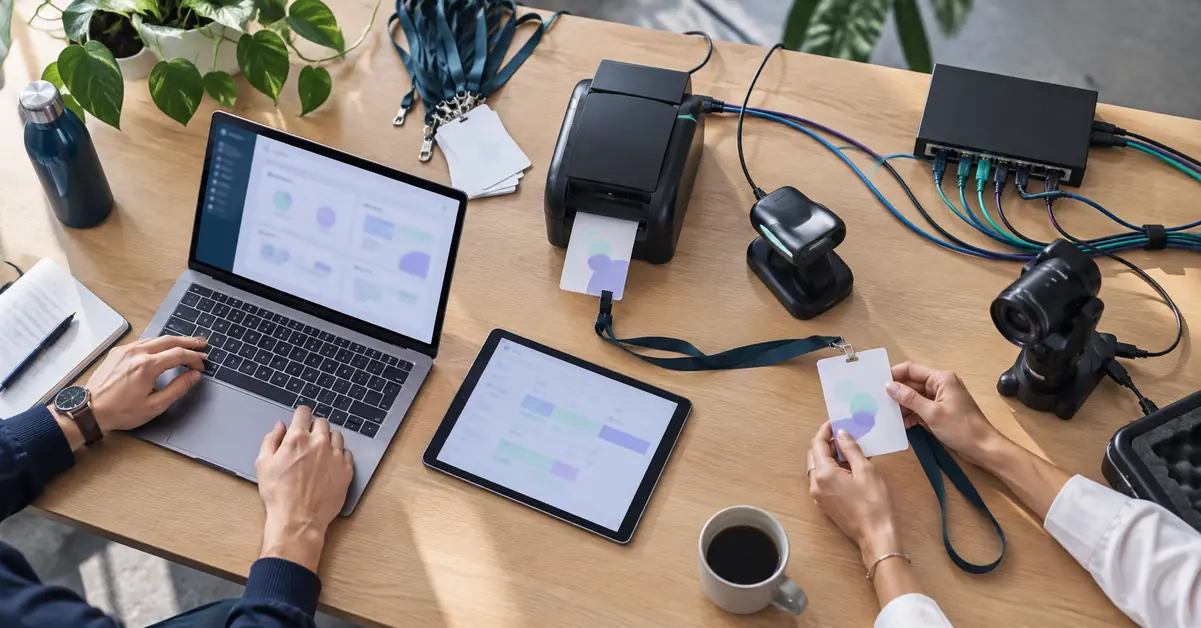
Governance is the part that almost nobody includes in the initial event brief — and the part that costs the most later, when it is already too late to put things right calmly. Governing event data means having clear answers to some very specific questions: who within your organisation can access an attendee’s contact details? How long are those details retained once the event is over? What happens to the data if an agency organises the event on behalf of an end client, and who is responsible for it in that case?
For events involving sponsors, the question becomes even more complicated: what attendee data does your event management platform share with each sponsor, and on what legal basis? This is not a technical question. It is a business decision that someone needs to document before the event begins, rather than during a subsequent audit when there is no longer any room to improvise a reasonable answer.
If your event brings together attendees from several countries, governance becomes more complex again: the EU GDPR and UK GDPR are not exactly the same framework, and assuming that compliance with one automatically covers you under the other is a common mistake. It is worth resolving this with your provider before signing, rather than halfway through organising the event.
The regulatory framework is neither optional nor simply a set of recommended best practices: the EU GDPR provides for fines of up to €20 million or 4% of annual worldwide turnover, whichever is higher, as confirmed by the European Commission. Under UK GDPR, the ceiling is set independently at £17.5 million or 4% of worldwide turnover, whichever is higher, according to the Information Commissioner’s Office — a good illustration of exactly the point above: the two regimes run in parallel, not on autopilot from one to the other. But reducing data governance to ‘avoiding a fine’ misses the bigger picture. Good governance of your event data is, above all, what enables you to answer accurately months later — without guessing — which specific attendees generated real business and why. Making these decisions properly is just as much a part of event technology as choosing the registration system or the app.

Security: the part nobody notices until it fails
Data security at events suffers from a perception problem: while everything is working, it is invisible. Nobody congratulates the event technology team because there was no breach during the accreditation process. Security only becomes noticeable when it fails — and when it does, it tends to fail at the worst possible moment, with the event already under way and no room to improvise a solution.
The most common points of risk are rarely sophisticated. Registration forms without encryption in transit. Attendee lists shared by email between the organiser and an external agency, with no version or access control. Event backend credentials shared among several members of the team, with no traceability showing who accessed or changed which data and when. We have already explored several of these issues in detail when looking at data security for virtual and hybrid events, and the same logic applies to in-person events: access controls, encryption and clear protocols governing who can access each piece of data are not luxuries reserved for large-scale events. They are the minimum foundation that should be expected for an event of any size.
Before an event with a high volume of registrations, spend half an hour reviewing who actually has access to the attendee list, whether that list has ever been shared through a channel you do not fully control, and whether your provider can explain — with facts rather than slogans — how the data is encrypted both in transit and at rest. You do not need a dedicated security department to carry out this review. You simply need to do it, and to do it before the event begins rather than after something has gone wrong.
Three questions to ask before choosing an event management system
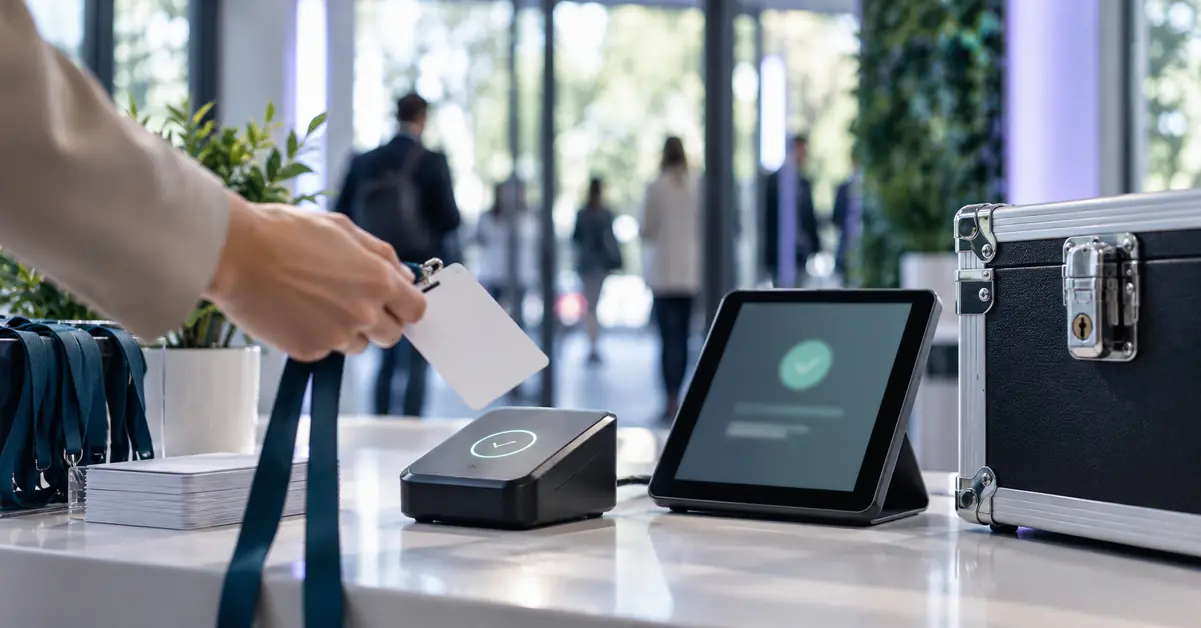
Once integration, governance and security are on the table, evaluating event technology according to business criteria rather than functionality alone comes down, in practice, to three straightforward questions you can ask during any demo.
The first: what happens to my data if I stop being a customer? A serious provider will give you a clear answer in writing, rather than something vague such as ‘export available on request’.
The second: can I see an attendee’s complete journey in one place, from registration through to sales follow-up? If the answer involves opening three tabs and manually cross-referencing data, you do not have an integrated event management platform. You have three tools bundled into a single invoice.
The third: who at the provider is responsible if there is a security incident, and how quickly do they commit to responding? If you do not have that person’s name and that response time in writing before you sign, you will need them precisely on the day when you have the least time to start looking.
The broader change taking place is that 70% of organisers still face real difficulties in measuring the return on their events, and that difficulty is rarely caused by a lack of data. It comes from data that is poorly connected, poorly governed or inaccessible at the exact moment it is needed. Event data management is moving away from being a technical conversation confined to the IT department and becoming, increasingly, a board-level discussion. In the same way that nobody now questions whether an event needs a production budget, it will soon be equally difficult to question whether it needs a data architecture budget.
Event technology that genuinely works is technology that integrates, governs and protects at the same time, rather than doing just one of those three things well. Companies that understand this sooner will reach 2027 with an advantage that may not be visible in a demo, but becomes very clear at the moment they need to answer — with real data on the table — what worked and what did not.
We have explored these topics in our latest published whitepaper. Download it using the button below.
About Eventscase
The Eventscase platform helps event organisers manage corporate events, conferences, and trade shows, whether large, small, in-person, hybrid, or virtual. No technical skill is required at all. Anyone can create beautiful event websites, registrations, badges, perform check-ins, event apps, 1:1 meetings and more. Everything under the brand and domain of your company can be implemented with an Eventscase whitelabelled platform.
If you would like to subscribe to our newsletter to get live updates on everything related to our platform – news, blogs, events, announcements and much more, please, register here.