

When people talk about increasing event attendance, they are almost always looking in the wrong direction. They review the post-event survey, analyse the highest-rated sessions, and ask attendees what they would improve for the next edition. All of that helps, but it has an obvious limitation: you are listening to the people who already chose you.
Real growth is rarely in that group. It is in the people who visited the landing page and did not register, in those who opened the invitation and left it for later, in those who thought, “this event is not for me” or “I would rather not go on my own”. Maritz estimates that, in associations, only around 10% to 20% of members usually attend the main annual event; the remaining 80% to 90% represents a huge opportunity that many organisations barely study.
The mistake of listening only to people who already attend
The regular attendee is visible. They buy a ticket, appear at check-in, generate behavioural data, and respond to surveys. The non-attendee, by contrast, leaves barely any trace. That is precisely why they are so easy to ignore. But if your goal is not just to repeat, but to grow, you need to understand the invisible audience.
The question should not only be, “what did the people who came value most?”, but “what friction stopped the people who did not come?”. That shift in perspective completely changes the strategy. Because in many cases, the problem is not promotion or awareness: it is the design of the experience before the event has even begun.
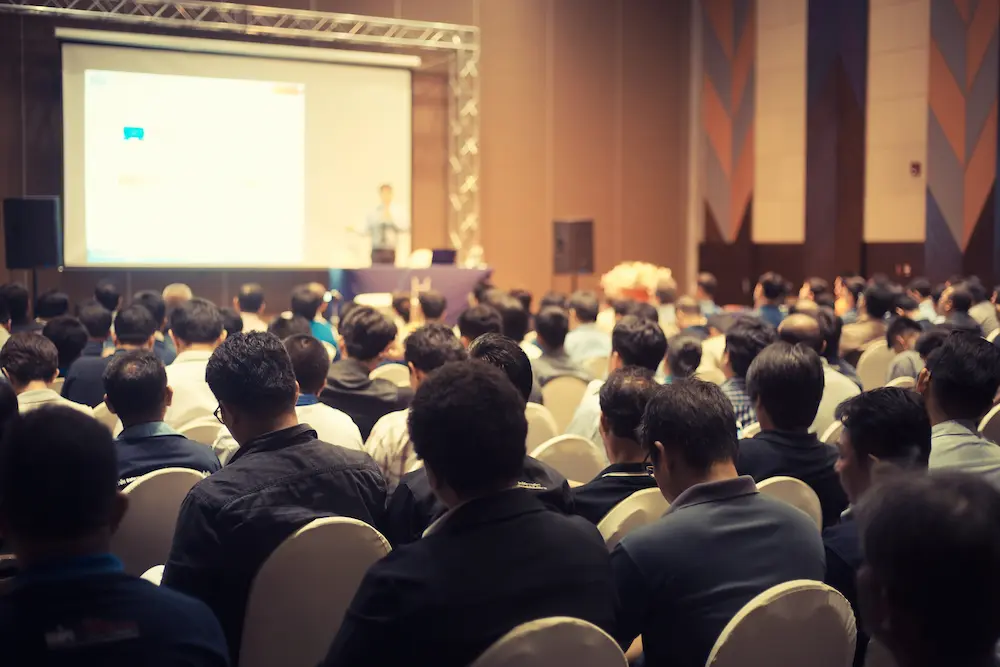
What is holding event attendance back today
Going alone is still a real barrier
One of the most underrated ideas in the industry is that many people do not avoid events because of lack of interest, but because of lack of social context. The most striking figure in the Maritz report is that 59% of Gen Z avoids an event if they do not know anyone else who is going. That does not mean they do not want in-person connection; on the contrary, the report itself highlights that they are looking for genuine connection and professional opportunities, but they do not always want to walk cold into an environment that expects them to socialise from minute one.
This point forces us to revisit a fairly widespread assumption: thinking that adding a cocktail reception, a long coffee break, or a networking area is enough for connection to happen by itself. For part of the audience, especially first-timers, junior attendees, or people travelling alone, that format does not make anything easier. It simply shifts the entire burden of breaking the ice onto them.
Free does not always mean accessible
Another common misunderstanding is to believe that a free event removes the barrier to entry. In reality, “free” rarely means “costless”. There is time invested, travel, hotel, uncertainty, work schedules, and mental energy. Maritz also points out that a significant share of Gen Z works in more unstable economies or supplements their income, so even a no-cost invitation can feel hard to justify if there is no clear value proposition.
That is why, when a brand asks how to increase event attendance, it is not enough to review the ticket price. You need to review the total perceived cost. If the person feels they are going to lose an entire morning to hear generic messages, queue, walk in alone, and leave without useful connections, the problem is not financial: it is expectation.

Perceived value has changed
This is probably the most interesting shift. Emerging audiences do not always want more programme, more names, or more spectacle. According to Maritz, value for younger attendees looks more like this: real voices instead of star power, experiences they cannot get on YouTube or TikTok, hands-on activities with other people, micro-communities built around shared interests, connection with local culture, and time to decompress.
That logic fits a broader trend across the sector. BizBash notes that in 2026, smaller and more curated gatherings designed with greater intention are gaining traction, together with a more human view of events and less obsession with surface-level impact.
Translated into marketing language, your event is no longer competing only with other events. It is competing with tiredness, overload, packed calendars, and an endless supply of digital content. If it wants to move someone from doubt to attendance, it has to promise something more concrete than “an inspiring day”.

How to increase event attendance before registration even happens
Design for first-timers, not only for regulars
Many events are designed from the perspective of the seasoned attendee: they know the format, understand the social code, know which sessions to choose, and how to find their way around the venue. But if you want to grow, you need to design from the opposite perspective.
That means creating specific routes for first-time attendees, welcome messages that reduce uncertainty, agenda recommendations by profile, arrival groups, visible hosts, and gentler introduction systems. The goal is not to infantilise the experience, but to reduce entry anxiety. The less energy someone needs to “decode” your event, the more likely they are to register and return.
Turn the event website into an anxiety filter, not a brochure
The event page is often treated as an information asset, when in reality it should be a psychological conversion tool. It should not only explain what is happening, but also help answer the questions that rarely appear in the copy: who usually attends, what a newcomer will find, how the experience is structured, what level of participation is expected, or how the content adapts to different attendee profiles.
This is where it makes perfect sense to work with an event website that is synchronised with registration, so you can show different information depending on whether someone has already registered, what kind of attendee they are, or where they are in the journey. That level of personalisation reduces friction and makes the event feel clearer and more accessible.
Build belonging before the doors open
A large part of event attendance is decided before the event, but also before registration. It is decided when someone imagines whether there will be people like them there, whether they will feel out of place, or whether they will have useful conversations. That is why micro-communities, pre-event meet-ups, themed groups, and softer matching systems have so much potential: they do not sell a ticket, they sell a feeling of belonging.
In fact, this approach connects with something we have already explored on this blog: the attendee experience does not begin on the day of the event, but from the very first digital touchpoint. In that sense, you can read this article: How to improve the attendee experience through technology. The attendee experience does not begin on the day of the event, but from the very first digital touchpoint.
The metrics that really tell you whether you are going to grow
If you genuinely want to increase event attendance, you need to measure more than tickets sold or email open rate. It is worth starting to track the percentage of first-timers, how many people register without knowing anyone, which objections appear most often among non-registrants, which segments convert worst despite showing interest, and which website content reduces abandonment the most.
In other words: stop looking only at event performance and start looking at the conversion of doubt. That is where growth is.
Real growth is in the people who still have not come
Increasing event attendance is not only about attracting more traffic or pushing more registrations. It is about designing a pre-event experience that reduces friction, builds belonging, and makes it clear why that event deserves a yes. Real growth, very often, lies in the people who have not attended yet.
The post-event survey will tell you how the edition went. The non-attendee, by contrast, will tell you how much it can grow. And that is probably the most interesting conversation any event brand can have today.