
April has once again shown that the events industry is at a particularly active point in its development. The conversation is no longer only about recovery, attendance or innovation as a broad concept. We are now talking about something more specific: how to use technology better, how to look after the teams that make events possible, how to recognise professional talent, and how to transform every attendee touchpoint into a smoother experience.
During the month, Eventscase has been present in a range of initiatives that clearly reflect this evolution: from the jury meeting for the MPI Iberian Awards to training sessions on artificial intelligence, as well as professional communities such as EVA Alliance, EMA (Event Managers Association) and The Kollective. We have also made progress in one of the most operational, yet most decisive, areas of any in-person event: onsite badging.
Below, we review the main highlights from April.
MPI Iberian Awards: recognising the talent driving the industry forward
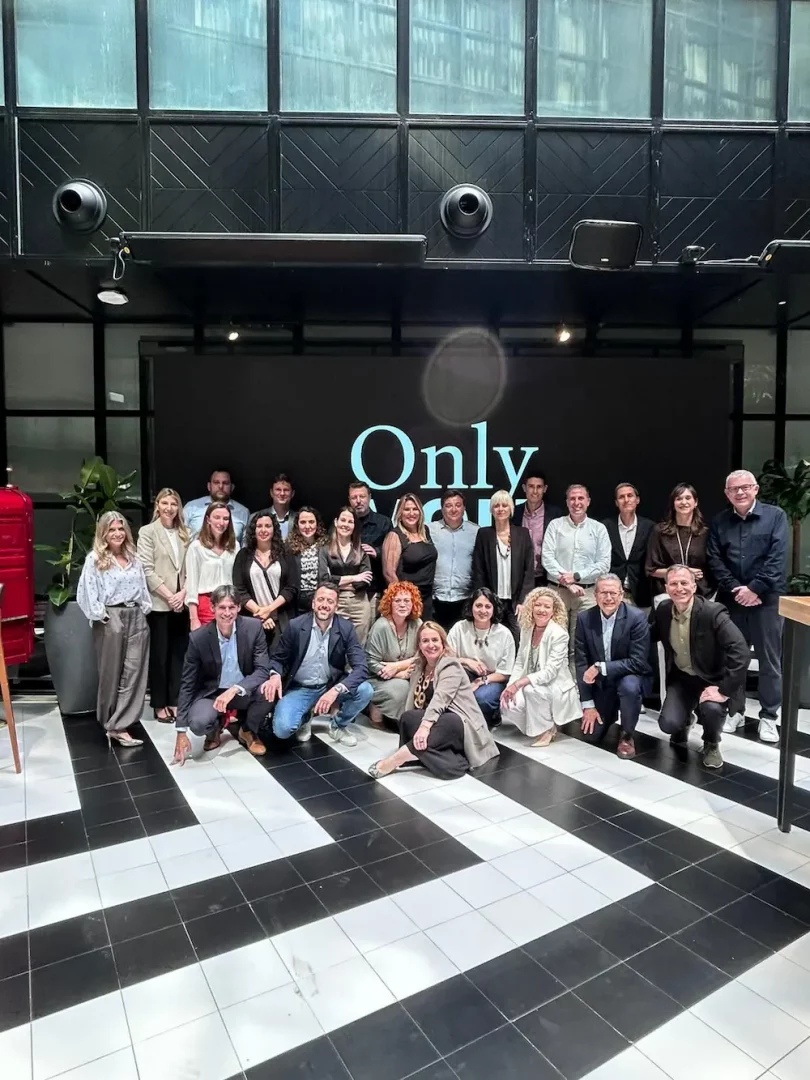
One of the most significant moments of the month was our presence at the jury meeting for the 8th MPI Iberian Awards, the awards organised by MPI Iberian Chapter to recognise excellence among professionals, projects and initiatives in the meetings and events industry in Spain and Portugal. The jury meeting took place on 20 April and the awards ceremony on 6 May, coinciding with Global Meetings Industry Day at Puy du Fou España in Toledo. We will share all the details of that event in the May bulletin.
The jury meeting was held at Only YOU Hotel Atocha, where the jury selected the finalists across ten categories from 130 entries, a figure that consolidates these awards as a benchmark within the Iberian MICE ecosystem.
For Eventscase, being part of these processes is important for two reasons. Firstly, because it allows us to stay close to the projects that are setting the real pace of the industry. Secondly, because it reinforces something that is increasingly necessary: giving visibility to the strategic, creative and operational work behind every event. Excellence is not only found in the final result, but also in the ability to design meaningful experiences, measure impact and build value for attendees, brands and communities.
EMA Learn Online: simple AIs, extraordinary events
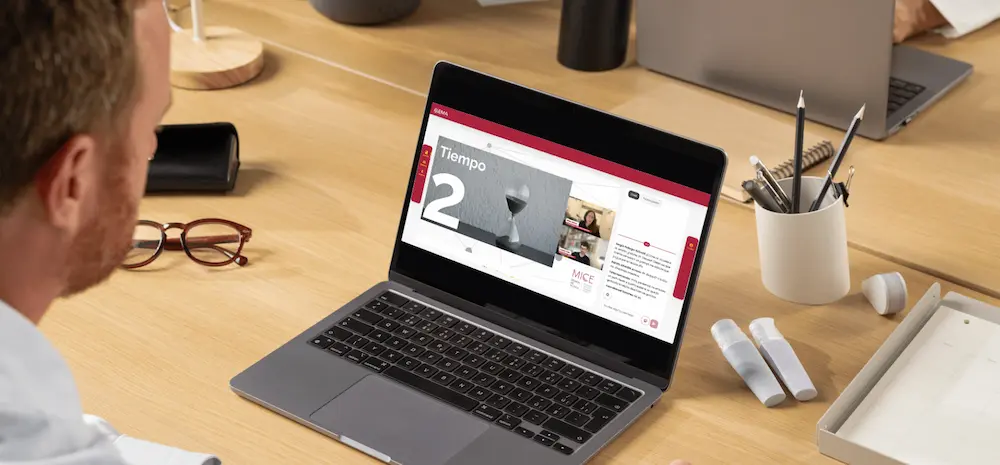
Artificial intelligence once again took centre stage on the April agenda with the EMA Learn Online session “Simple AIs. Extraordinary Events”, held on 30 April. The session featured Fátima Barbero, VP of EMA and Head of Field Marketing at Lighthouse, alongside our CEO and Padcelona’s CEO, Joaquim Pintó.
The focus of this session was particularly interesting because it avoided presenting AI in abstract terms. The aim was not to talk about artificial intelligence as a trend, but to bring it into the day-to-day work of the event marketer: how to simplify processes, save time, improve decision-making and turn accessible tools into tangible results.
The presentation itself was built around a very clear idea: “We are arriving late to a present that has already changed”. From there, the conversation was structured around three highly applicable concepts for everyday work: simplicity, time, and the ability to create extraordinary experiences through better processes.
Sessions like this are necessary because they help demystify AI. It is not about replacing professional judgement, but about expanding teams’ ability to research, synthesise, plan, document and execute more effectively. AI brings value when it is integrated with clear intention and when the professional remains in control of the objective, the context and the quality of the outcome.
EVA Alliance: ethics, creativity and artificial intelligence
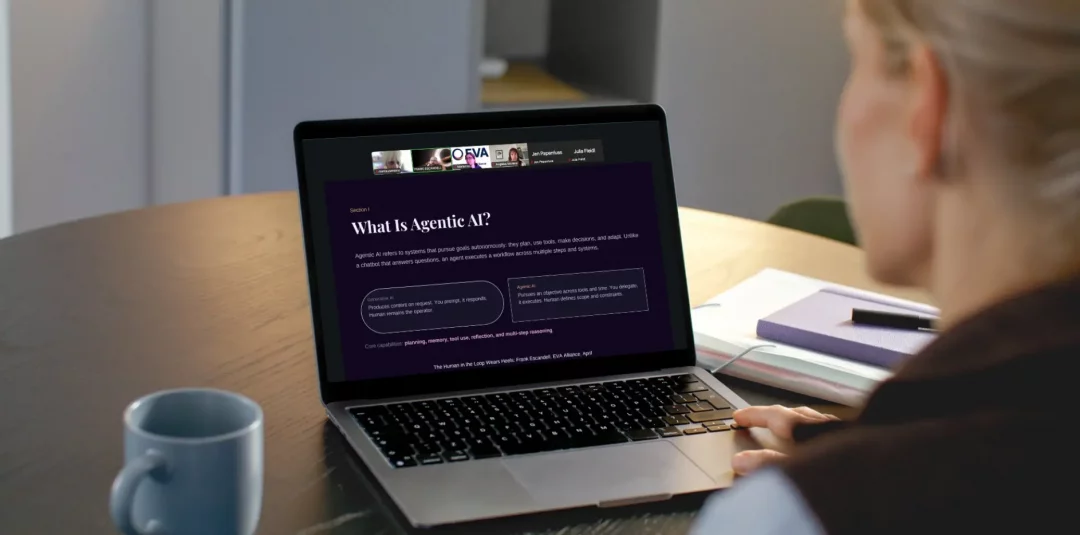
April also saw the third session in EVA Alliance’s learning series, focused on ethics and artificial intelligence. Following the first sessions, which were more oriented towards tools, processes and practical applications, this new conversation with Frank Escandell from OdiseIA addressed an essential question: how to find the balance between automation and humanity.
This topic is especially relevant for the events industry because we work with human experiences. We can automate tasks, accelerate processes, personalise communications and analyse data in greater depth, but we cannot forget that the distinctive value of an event still lies in relationships, emotion, creativity and the ability to create shared context.
The session connects with a trend we have already been observing: AI training is entering a more mature phase. Knowing the tools is no longer enough. The next step is to decide, with judgement, what to automate and what not to automate, how to protect the authenticity of the experience, and what role the human team should continue to play in the event strategy.
New EPSON C4000: onsite as an arrival experience
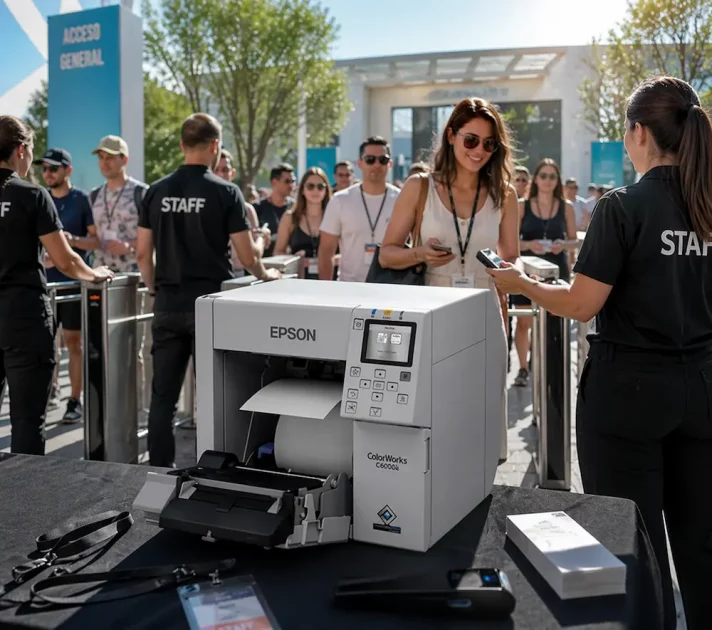
April also allowed us to move forward with a product update closely linked to the in-person experience: the incorporation of the EPSON C4000 into our onsite service.
Badging is no longer a purely operational procedure. It is one of the first moments of contact between the attendee and the event. If access creates queues, confusion or friction, that perception shapes the rest of the day. If, on the other hand, the process is fast, clear and well handled, it conveys organisation, attention to detail and professionalism.
The incorporation of the EPSON C4000 expands the onsite printing possibilities within self-printing and helpdesk solutions, integrated with iPad, support, connectivity and Kiosk software. Its value lies in enabling more visual inkjet badges, with a stronger finish, greater personalisation options and lanyard-ready formats without the need for badge holders.
This opens up an interesting opportunity for congresses, summits, trade shows and corporate events where badging also communicates brand, attendee category and level of experience. Ultimately, onsite is no longer just about printing badges: it is about designing a better arrival at the event.
The K-Events: strategy, communication and real-life cases
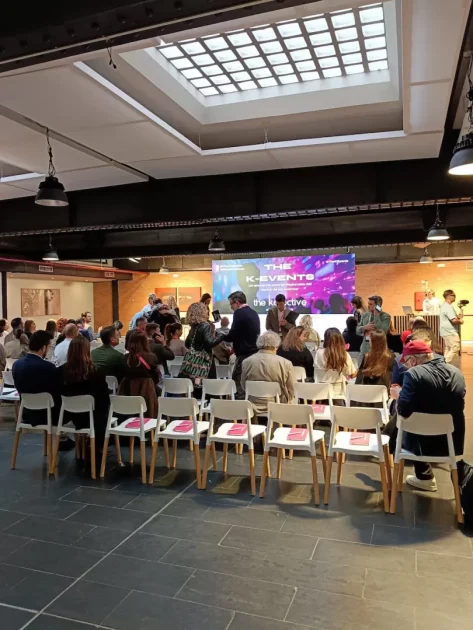
The K-Events, the gathering promoted by The Kollective in Madrid, also took place on 29 April. The event was held at Espacio La Salle and was designed as a space for industry professionals to share success stories and take part in round tables.
The programme covered topics that are particularly aligned with the current moment in the industry: production in service of strategy, the event within companies’ value chains, new suppliers and systems, and real-life cases that could serve as inspiration.
This approach is highly representative of a broader evolution: the event is no longer understood as an isolated action, but as a tool for communication, relationships and business. The Kollective captures this well by framing the conversation around sustainability, creativity, technology, training and professionalisation.
EMA Learn Madrid: “Help, I’m always in event mode”
Finally, April also gave us a much-needed conversation: the EMA Learn Madrid session “Help, I’m always in event mode”, held on 23 April at AC Hotel by Marriott Atocha.
The session focused on a reality that is often normalised too much within the industry: the constant pace, the difficulty of switching off, and the emotional load involved in organising events. Talking about professional wellbeing does not mean moving away from productivity; it means recognising that the sustainability of the industry also depends on how the people who make it possible work.
When everything feels urgent, caring for processes, planning with greater judgement and relying on the right technology are also part of a healthier way of working.
April confirms a more conscious and more demanding industry
April was a highly representative month of the moment the industry is experiencing. Artificial intelligence is advancing, but the conversation is becoming more mature: it is no longer just about using tools, but about doing so with ethics, judgement and purpose. Professional communities are gaining weight as spaces for sharing real knowledge. Awards and industry gatherings reinforce the importance of recognising talent. And onsite technology continues to evolve to improve the experience from the very first minute.
Everything points in the same direction: a more strategic, more conscious and more demanding industry. At Eventscase, we want to continue playing an active part in that evolution.