
May has been a month of evolution, connection and learning for Eventscase and for the events industry as a whole. While April was marked by preparation for major industry gatherings and the consolidation of professional communities, May has allowed us to see how many of those conversations have taken shape in real spaces for meeting, training and reflection.
In this post, we review some of the most relevant updates: the name change to “The Event Loop”, the celebration of MPI Iberian Chapter’s GMID 2026, the EMA Learn session “Events: the most influential marketing channel” by Event Managers Association Spain, the publication of our latest whitepaper on artificial intelligence, the launch of MPI Iberian Chapter’s Happenings, the sustainability meeting led by AEVEA in Barcelona and the upcoming events already in our calendar.
One of the main updates this month is the change of name of our newsletter, which is now called The Event Loop.
This is not just a formal change. The new name better reflects the approach we want to give this space: a place to observe what is happening in the industry, connect conversations, share learnings and place sector news within a broader context.
The Event Loop has a clear purpose: to go beyond a simple summary of activities. We want each edition to help readers understand where the MICE sector is heading, which topics are gaining prominence on the professional agenda and how technology, sustainability, community and strategy are transforming the way we design, produce and measure events.
Because events do not begin when the doors open, nor do they end when the lights go out. Between one event and the next, many things also happen: relationships are built, learnings are shared, processes are reviewed, opportunities are identified and the next step is prepared.
GMID 2026: celebrating the real impact of the meetings and events industry
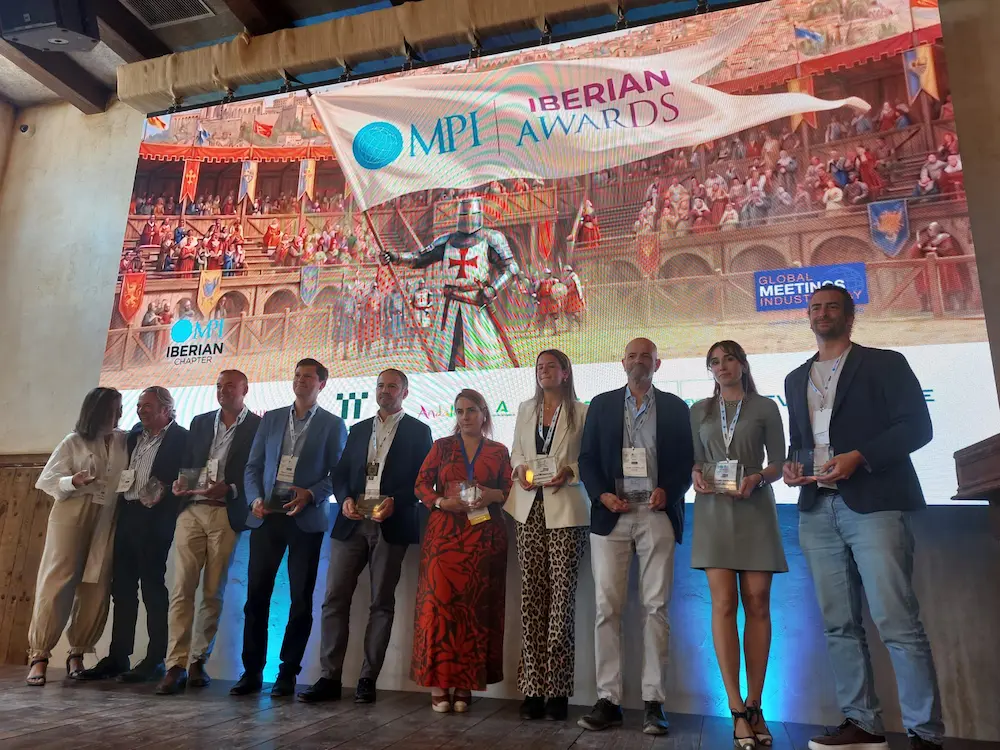
Global Meetings Industry Day 2026, held on 6 May, was one of the major dates of the month for the MICE industry. MPI Iberian Chapter celebrated it at Puy du Fou España, in Toledo, where it also hosted the eighth edition of the MPI Iberian Awards.
GMID is much more than a commemorative date. It is an opportunity to recognise the economic, social and strategic impact of professional meetings and events. At a time when many organisations are reviewing their investments, formats and return indicators, gatherings of this kind help showcase what the sector contributes: business, knowledge, connections, talent, innovation and territorial development.
The MPI Iberian Awards, promoted by MPI’s Iberian chapter, were created precisely with this objective: to recognise excellence, innovation and commitment among MICE professionals in Spain and Portugal. This year’s edition once again demonstrated the strength of a community that not only produces events, but also creates experiences capable of generating measurable impact and long-term value.
For Eventscase, staying close to these spaces is important because it allows us to listen first-hand to the sector’s challenges and priorities. Event technology only makes sense when it responds to real needs: improving the attendee experience, simplifying operations, enabling measurement and helping teams make better decisions.
EMA Learn Barcelona: events as an influential marketing channel
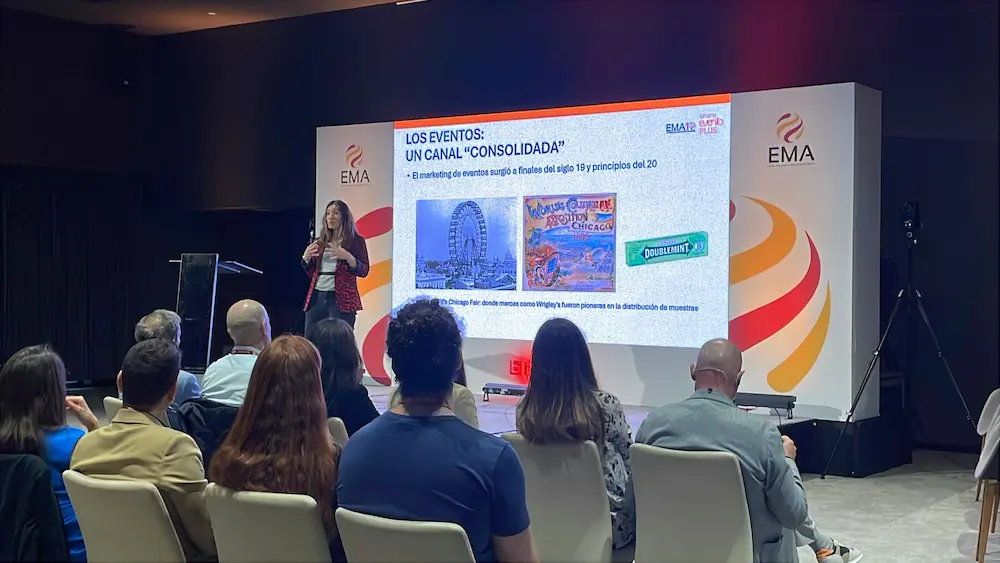
Another of May’s standout gatherings was EMA Learn “Events: the most influential marketing channel”, organised by Event Managers Association Spain in Barcelona on 7 May.
The topic could not have been more timely. For years, events have been understood by many organisations as a one-off action: a launch, a convention, a trade fair, an activation or a corporate session. However, it is becoming increasingly clear that events are a strategic channel within marketing and communications.
Why? Because they make possible something that other channels do not always achieve: generating genuine attention, creating emotional bonds, activating communities, collecting qualitative and quantitative data, and turning a value proposition into a tangible experience.
The event as a marketing channel does not compete with content, CRM, social media or digital campaigns. It integrates them. A good event can feed post-event content, generate commercial opportunities, strengthen customer relationships, position a brand and provide highly valuable information about the audience’s interests, behaviours and expectations.
The conversation proposed by EMA connects directly with an evolution we have been observing for some time: the shift from Event Manager to Event Marketer. A more strategic profile, more focused on business objectives and more aware of the importance of measuring, optimising and demonstrating impact.
New whitepaper: AI applied to event production and analysis
This month we also published our latest whitepaper: “AI Applied to Event Production and Analysis: Efficiency and Accuracy”.
Artificial intelligence continues to occupy a central place in the sector’s conversation, but the focus is changing. It is no longer enough to talk about AI as a trend or as a creative tool. Its real value emerges when it is applied to specific problems in event production and analysis.
In the whitepaper, we explore how AI can help before, during and after an event. Beforehand, by anticipating attendance, demand by time slot, staffing needs, capacity or resources. During the event, by observing real-time signals such as access points, flows, queues, room occupancy or session performance. Afterwards, by analysing feedback, summarising content, detecting patterns and turning event information into useful knowledge for future editions.
One of the central ideas in the document is that AI should not be understood as a cosmetic layer added to the event, but as a tool to improve decision-making. And that requires working with good data, clear metrics, precision criteria and human oversight.
Not all use cases require the same level of reliability. An automatic summary can allow for later review; an operational alert linked to safety or capacity requires much greater precision. That is why applying AI in events is not just about automation, but about designing useful, responsible systems adapted to the context.
MPI Iberian Chapter launches its Happenings
May also saw the launch of MPI Iberian Chapter’s Happenings, a new initiative designed to continue activating the professional community beyond the major milestones in the calendar.
This type of format responds to an increasingly clear need in the sector: to create more frequent, agile and close-knit spaces for meeting. Not all learning takes place at large conferences, and not all professional relationships are built at large-scale events. Sometimes, the real value lies in smaller conversations, specialised gatherings and dynamics that facilitate exchange between professionals facing similar challenges.
The Happenings fit very well with a trend we are seeing grow: the building of 365 communities. In other words, professional ecosystems that do not depend on a single annual event, but on a sequence of touchpoints that keep relationships, learning and collaboration alive.
AEVEA and sustainability: a first session to move from commitment to action
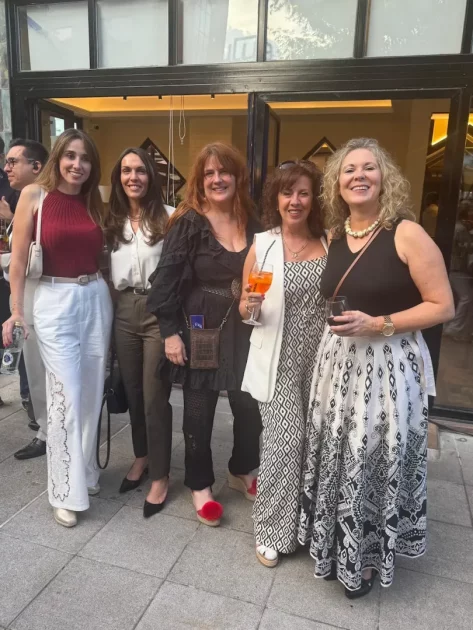
Sustainability also held an important place on the month’s agenda with the celebration in Barcelona of the first Sustainability in Action session, led by AEVEA’s Sustainability Committee.
During the session, the committee, made up of Ariadna Sendra Garcia, vice-president of AEVEA and representative of ESTUDI FERRAN SENDRA; Nacho Gómez, from MUT Agency; and Natalia Ayelen Mollard, from 4foreverything, presented the objectives set for this new stage of work. Among them is the launch of the Manifesto of Commitment to Sustainability in the Events Industry, an initiative through which AEVEA seeks to establish common ground for moving towards more responsible event models.
The session brought together ten member agencies, who examined the content of the Manifesto and shared knowledge, experiences, questions and learnings in a relaxed atmosphere. The value of this type of gathering lies precisely in opening practical spaces for conversation, where sustainability stops being framed as a general intention and starts being translated into decisions, processes and concrete day-to-day challenges for agencies.
Upcoming events: community before the summer
June arrives with an especially relevant agenda for the professional community and let’s not forget Eventoplus’ BED on 9 July, where we will be sponsors and where we’ll be delivering an activation that will be anything but conventional.
One of the most anticipated moments will be the celebration of MPI Iberian Chapter’s 20th anniversary. The chapter, founded in February 2006, marks two decades of activity as MPI’s representative in the region and as a space for connection, training and networking for events and meetings professionals.
We will also have EMA’s Summer Parties in Barcelona and Madrid. The Barcelona event is scheduled for 18 June at Hotel Casa Fuster, and the Madrid event for 25 June at Ginkgo Sky Bar. These gatherings are a good opportunity to close the first half of the year, strengthen ties and continue building community in a more relaxed format.
Beyond networking, this type of event fulfils an important function: sustaining relationships between professionals throughout the year. In such a demanding industry, where teams often work to tight deadlines and under significant operational pressure, informal meeting spaces also help generate trust, share experiences and open up new collaborations.
Conclusion: an industry that learns while it moves
May has been a month that sums up the current moment in the events sector very well: more community, more applied technology, more sustainability awareness and a greater need to demonstrate strategic value.
The move to The Event Loop reflects precisely that intention: to observe the industry from within, connect what is happening across different professional spaces and share a useful reading for those who design, produce, manage and measure events.
Because the future of the sector is also built between one event and the next.