

The year 2025 has undoubtedly been transformative for the MICE sector. Following a period of accelerated change driven by digitalisation, environmental imperatives and increasingly sophisticated audience expectations, event professionals now find themselves operating within a fundamentally redefined landscape. The challenges extend far beyond logistics or the creation of engaging experiences; they now span sustainability, technology, data strategy, personalisation, ROI and operational agility.
These Key Learnings for Event Organisers are not merely reflections on an intense year — they are strategic principles that will shape how professional gatherings are conceived, planned and delivered in 2026 and beyond. To understand what 2025 has left behind is to understand the direction in which the global events industry is heading.
Sustainability Is No Longer Optional — It Has Become a Strategic Pillar
Throughout 2025, sustainability established itself as an essential requirement for the MICE industry. It is no longer enough to deliver an attractive or well-produced event: stakeholders now expect environmental responsibility and alignment with the Sustainable Development Goals. This is one of the most crucial Key Learnings for Event Organisers, as sustainability now represents a structural rather than decorative element.
This shift translates into concrete decisions: venues with environmental certifications, local or zero-kilometre catering, reduced paper usage, minimised waste and a meaningful effort to measure the event’s carbon footprint.
For organisers, sustainability must now be embedded from the earliest stages of event design. It is no longer about last-minute adjustments, but about planning with reusable or recycled materials, selecting suppliers aligned with green criteria and considering everything from attendee transport to energy consumption. This holistic approach is both a social expectation and a competitive advantage. Today, an eco-friendly event opens doors that once did not exist — a clear takeaway among the Key Learnings for Event Organisers.

Technology, Data and Artificial Intelligence Redefining Event Planning
If 2024 represented the acceleration of digitalisation, 2025 has firmly consolidated it. Artificial intelligence (AI), data analytics and process automation have become standard practice — a defining characteristic among the Key Learnings for Event Organisers.
AI now supports nearly every stage of the event lifecycle: real-time chatbots, predictive demand analysis, behavioural insights, automated workflows and tools for optimising attendee flows.
Yet technology alone is not enough. The true value lies in how data informs strategic decisions — from adjusting catering quantities, redesigning spaces based on real-time footfall, segmenting audiences or personalising content. Planning is becoming less intuitive and more evidence-based, supported by metrics such as satisfaction, engagement, conversion and return.
For event managers, the lesson is clear: technology must be integrated not as an add-on, but as an essential component of event design and execution, a core element within the Key Learnings for Event Organisers.
Hybrid and Immersive Formats: A New Normal with Clear Advantages
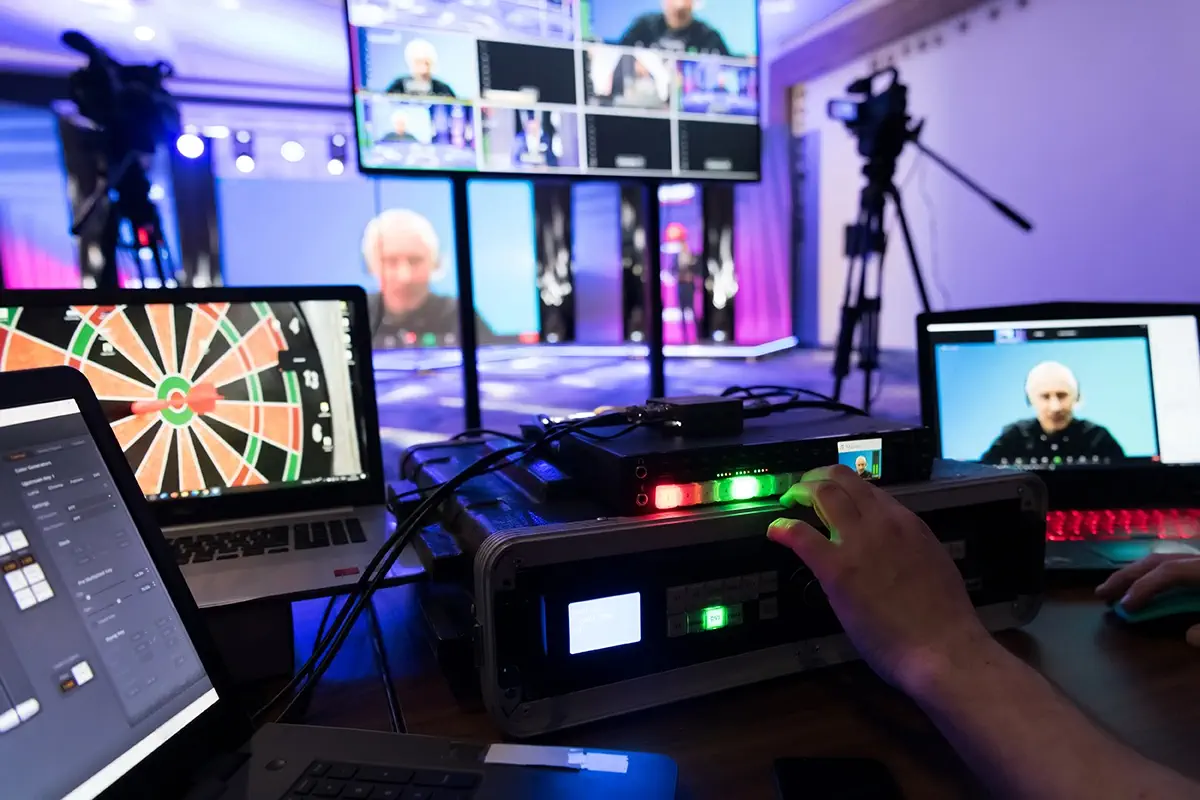
In 2025, hybrid formats have become the rule rather than the exception. According to industry data, a significant proportion of events now combine onsite attendance with virtual participation. This trend stands out among the Key Learnings for Event Organisers, as it reshapes production models and audience expectations.
This evolution responds to multiple needs: expanding audiences, offering flexibility, reducing logistical costs and adapting to changing environments or mobility restrictions. Beyond simple streaming, many organisations are now exploring immersive technologies — virtual reality, augmented reality or interactive digital experiences — to enhance the experience for remote participants.
For event organisers, this opens numerous opportunities: reaching international or segmented audiences without the need for travel, or optimising resources (space, logistics, catering) through partial virtualisation. However, it also presents challenges: ensuring that both the onsite and virtual experiences are consistent, engaging, well-designed and technically robust. The event narrative must adapt: content, dynamics and interactions must be conceived through a “phygital” lens — another of the major Key Learnings for Event Organisers this year.
Attendee Experience and Personalisation: The Key Learnings for Event Organisers to Standing Out
In 2025, attendees ceased to be names on a list and became true protagonists. A “one-size-fits-all” approach is becoming outdated, giving way to a focus on personalisation, inclusion, comfort and quality of experience — all central Key Learnings for Event Organisers.
Organisers must design events that meet increasingly demanding expectations: personalised itineraries, flexible spaces, accessibility, wellbeing (breaks, quiet areas, healthy catering), interactive experiences, relevant content and intelligent networking.
Moreover, event success is no longer measured solely by attendance figures but by engagement metrics, satisfaction, quality of interaction, impact and return on relationships — what some refer to as Return on Experience (RoE).
This shift calls for a new mindset. It is no longer just about logistical execution but about designing experiences: anticipating needs, refining details and creating emotional and intellectual value. This perspective highlights one of the Key Learnings for Event Organisers: experience design is now a non-negotiable strategic asset.
Agility, Efficiency and the Demand for Results: Intelligent Management in Uncertainty
2025 presented numerous challenges — economic shifts, regulatory updates, changing expectations and rapid technological evolution. In this context, rigid planning is no longer viable. Agile, iterative and flexible approaches now dominate, forming another critical point within the Key Learnings for Event Organisers.
Many organisations now adopt phased planning: pilot tests, feedback loops, continuous adjustment and resource optimisation. This approach allows rapid adaptation, minimises risk, reduces waste and improves audience alignment.
Meanwhile, demonstrating return on investment — or return on value — has become essential. With the support of analytics and automation, organisers can now provide measurable outcomes: leads generated, engagement levels, conversion rates, satisfaction scores and reduced carbon impact.
Event professionals must now master not only creativity and logistics but also strategy, metrics, sustainability and adaptability — all of which reflect the evolving Key Learnings for Event Organisers.

Specialisation, Niches and Segmentation: Winning Through Unique Identity
Another key learning from 2025 is the importance of differentiation. As the event landscape becomes more competitive and generalist, audiences increasingly seek relevance, value and specificity. In this environment, specialising in a niche — whether thematic, sectoral, format-based or attendance-based — can provide a significant advantage, and forms one of the most strategic Key Learnings for Event Organisers.
Corporate events, scientific conferences, technology gatherings, wellness events, sustainability forums, incentive trips, sector conventions and specialised trade fairs all have room to thrive when designed with clear focus. The corporate events market in Spain, for example, reported a growth of nearly 7% in 2025, reflecting rising demand for well-crafted professional events.
This environment requires a sharp definition of value proposition and identity: What problem do I solve? Which audience am I serving? What unique experience do I offer? This clarity can turn an ordinary event into one that is relevant, memorable and profitable.

What These Learnings Mean for 2026 — Strategic Reflections
Looking ahead, the learnings from 2025 must translate into concrete actions. This involves:
- Integrating sustainability from the earliest design stages, not as an add-on but as a structural foundation.
- Adopting technology, analytics and automation not merely to “save time” but to make informed decisions, improve experience and measure real outcomes.
- Designing events with a hybrid and immersive mindset, not as an exception but as a default format to maximise reach, flexibility and resilience.
- Placing attendees at the centre: personalisation, accessibility, comfort and emotional and intellectual value are now essential differentiators.
- Embedding agility into planning: systems that enable iteration, adjustment and rapid response without sacrificing coherence.
- Specialising: identifying niches, segments or themes that build brand, reputation and relevance.
- Measuring, analysing and communicating results: ROI, impact, satisfaction and sustainability — all backed by reliable data.
All these points encapsulate the most decisive Key Learnings for Event Organisers as the industry transitions towards 2026.
Conclusion
The year 2025 has shown that the role of the event organiser is undergoing profound transformation. Success is no longer defined by flawless logistics or impressive venues alone. Today, value lies in strategic coherence — integrating sustainability, technology, data, agility, experience design and specialisation.
For event professionals aiming to stay ahead, these insights are far more than recommendations: they represent a new professional standard and capture the essential Key Learnings for Event Organisers in the years to come.
About Eventscase
The Eventscase platform helps event organisers manage corporate events, conferences, and trade shows, whether large, small, in-person, hybrid, or virtual. No technical skill is required at all. Anyone can create beautiful event websites, registrations, badges, perform check-ins, event apps, 1:1 meetings and more. Everything under the brand and domain of your company can be implemented with an Eventscase whitelabelled platform.
If you would like to subscribe to our newsletter to get live updates on everything related to our platform – news, blogs, events, announcements and much more, please, register here.