

In recent years, we have experienced the hottest summers ever recorded since instrumental records began, as confirmed by the European Union’s Copernicus Climate Change Service. This is not alarmist rhetoric; it is operational data. For an event manager working with outdoor venues, holiday destinations or large-capacity facilities, these figures translate into cancellations, insurance claims, activated contingency plans and budgets being revised at the last minute.
The relationship between climate change and events has moved beyond being a corporate social responsibility section in an annual report. It has become a risk-management discipline requiring analysis, protocols and design decisions before the venue is booked and the first poster goes to print. What was once called “weather contingency planning” now has a more precise and demanding name: climate resilience.
What a climate-resilient event means in practice
The term is not green marketing. A climate-resilient event is one designed from the outset to absorb, adapt to and recover from climate-related disruption without compromising the attendee experience or the client’s objectives.
This involves intervention across three distinct areas: the selection of the destination and venue, the design of the programme and operational structure, and the communication model used with attendees and sponsors.
At the most basic level, climate resilience begins with recognising that certain risks have moved into a different category. Extreme heatwaves in southern Europe, once considered statistically infrequent events, have become a regular feature of summer.
Munich Re’s 2024 climate risk report documented global economic losses of $320 billion from natural disasters, with extreme weather events accounting for the largest share. For the events industry, which operates with fixed dates, predetermined locations and supplier chains that cannot be reconfigured within 48 hours, this context is structurally significant.

The specific climate risks facing the MICE industry
Not every event has the same vulnerability profile. A medical congress held in an indoor convention centre in Munich has a radically different level of climate exposure from an outdoor-living trade fair in Valencia in July or an adventure incentive trip in the Alps in March.
Accurately identifying the risk factors associated with each project is the first methodological step.
The most significant risks facing the MICE industry can be grouped into four categories:
- Extreme heat and public health. Temperatures above 38–40°C at high-capacity venues create direct health risks, increase energy consumption for air conditioning beyond the levels anticipated in venue contracts and reduce actual attendance as participants choose not to attend.
- Heavy rainfall and flooding. The isolated high-altitude depression, known as a DANA, that affected the Valencian Community in October 2024 — killing more than 200 people and damaging critical infrastructure — illustrates how an extreme weather event can suddenly make an entire destination inaccessible. Several congresses and corporate events scheduled in the area had to be cancelled or relocated with less than 72 hours’ notice.
- Transport disruption. Flights cancelled because of storms, rail services interrupted by flooded tracks and closed motorways directly affect attendance rates. They also generate a chain of additional expense claims that standard event-management contracts rarely address clearly.
- Regulatory and reputational pressure. An increasing number of companies have made public commitments to reduce their emissions. An event that generates a disproportionate carbon footprint, produces excessive waste or demonstrates indifference to its environmental impact can become a communications issue for the client, not just the organiser.
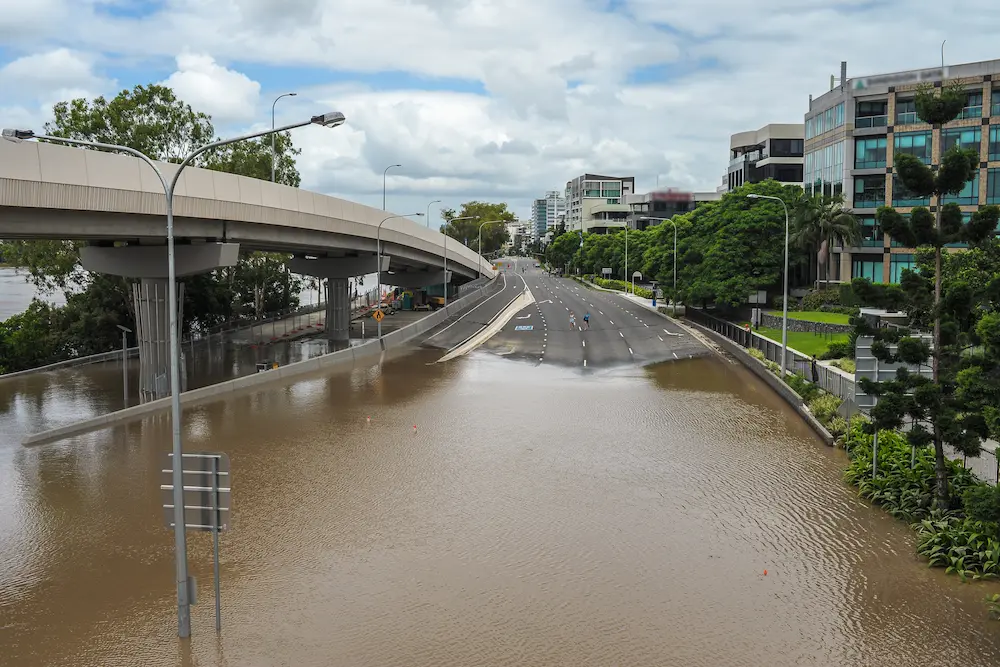
Design Decisions That Make a Difference: Climate Change and Events
Climate resilience cannot be improvised at the point of crisis. It must be designed in advance. The following decision-making levers have the greatest practical impact.
Destination selection and timing
The choice of destination remains the most influential factor in an event’s climate risk profile.
Some European convention bureaux already include data on the frequency of extreme events, air-quality indices and ten-year climate projections in their bid documents. The Edinburgh Convention Bureau, for example, has incorporated sustainability and resilience criteria as competitive differentiators against Mediterranean destinations that have historically dominated the summer congress market.
Timing also matters more than it once did. Holding a scientific congress in Seville in June 2015 represented a manageable risk. Holding it in July 2026 with 200 international attendees whose average age is 55 requires a health risk assessment that would not previously have been necessary.
Hybrid events as resilience infrastructure, not a secondary option
This is perhaps the most important conceptual shift that has yet to become fully established across the industry.
The digital component of an event should not be designed merely as a Plan B for people who cannot travel. It should be treated as resilience infrastructure that allows the event to remain operational even when in-person attendance is compromised.
When several European congresses had to reduce capacity or suspend outdoor sessions because of extreme heat warnings in August 2023, organisations that had invested in robust digital platforms were able to continue delivering their programmes remotely.
This allowed attendees who chose not to travel, or who were already at the destination but preferred to follow the sessions from their accommodation, to continue participating. Organisations that had treated digital delivery as a minor add-on paid the full operational and reputational price.
Having hybrid event software that integrates registration, streaming, virtual networking and real-time analytics is no longer a technological innovation decision. It is a risk-management decision.
Venue and insurance contracts with explicit climate clauses
Most standard contracts with venues and suppliers use the concept of “force majeure” in general terms. This creates legal disputes when climate disruption occurs but does not clearly fall within that category.
An episode of extreme heat that does not physically prevent access to the venue but causes attendance to fall by 40% is rarely covered by standard contractual clauses.
More advanced event managers are now negotiating specific cancellation or modification clauses based on precisely defined weather conditions. These may include an average temperature exceeding a specified number of degrees during the event, an official amber or red weather warning, or the declaration of a flood emergency in the area where the event is being held.
These clauses remove legal ambiguity and accelerate the resolution of claims.
Reducing the event’s footprint as a commercial advantage
Environmental sustainability and climate resilience are not the same thing, but they reinforce one another.
Reducing an event’s carbon footprint by selecting local suppliers, eliminating single-use materials, optimising logistics or using verified carbon offsetting provides a reputational benefit for the client. This is becoming an increasingly important consideration in corporate event briefs.
According to the 2023 ICCA Barometer, sustainability is now one of the three leading decision-making criteria when selecting destinations for international congresses. It ranks above factors that historically carried more weight, such as hotel provision or direct air connectivity.

Metrics and tools for integrating climate risk into event planning
Discussing climate resilience without translating it into specific metrics is little more than rhetoric.
Three indicators should be integrated into the planning process for any event of a significant scale.
Destination Climate Risk Score
The Destination Climate Risk Score is a composite assessment combining historical data on extreme events, regional climate-model projections and an evaluation of local emergency-response infrastructure.
Some destination management companies and consultancies specialising in sustainable events already offer this assessment as part of their destination advisory services.
Attendance rate under a disruption scenario
This is a projection estimating how many attendees would continue to participate if a moderate or severe weather warning were issued during the event.
The metric helps organisers correctly size their contingency digital infrastructure and negotiate minimum guarantees with the venue.
Contractual Flexibility Index
The Contractual Flexibility Index measures the percentage of the committed budget that could be recovered or renegotiated in the event of a defined climate-related disruption.
Ideally, a climate-resilient event should have more than 60% of its budget covered by contractual terms that provide some degree of flexibility in climate-related force majeure scenarios.
From awareness to competitive capability
Climate change and events are now an equation that the MICE industry can no longer manage reactively.
Organisations that are developing internal climate risk-management capabilities — or incorporating this expertise into their teams and supplier networks — are building a genuine competitive advantage over those that continue to plan as though weather conditions were only a minor source of operational uncertainty.
The path towards genuinely climate-resilient events involves integrating this perspective from the initial concept stage. It should not be added as an extra layer of sustainability at the end of the process, but treated as a design criterion with the same importance as the budget, the audience and the client’s business objectives.
For a deeper look at how technology can strengthen the operational resilience of your events, the Eventscase blog features resources on sustainable event management that complement this article’s strategic approach.