
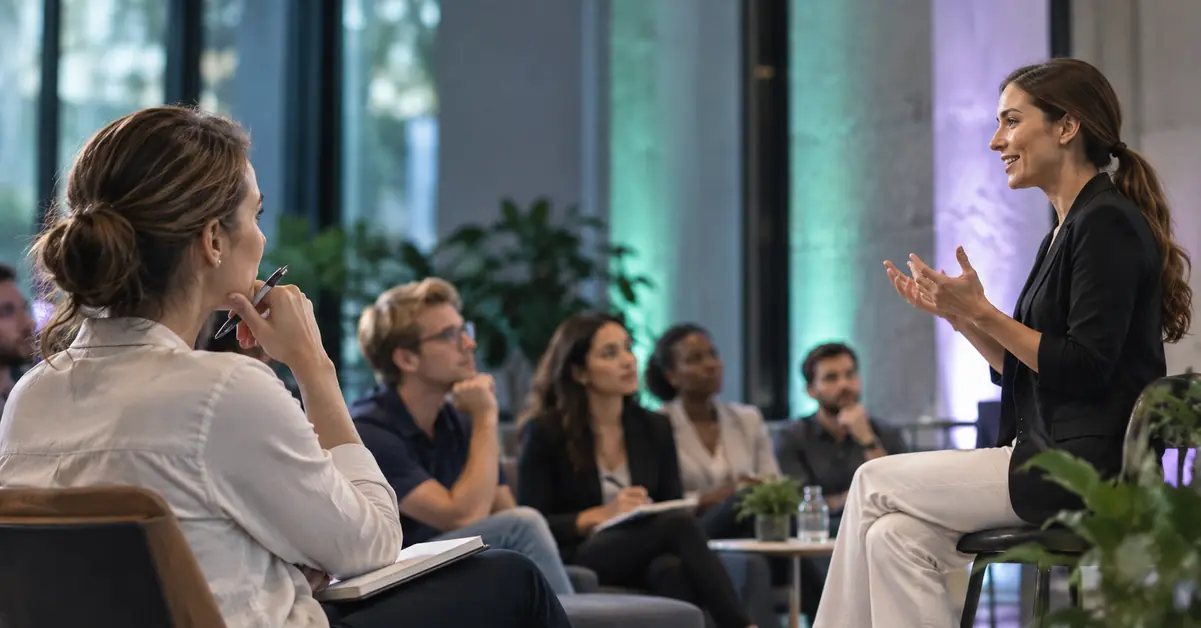
You’ve been there. On paper, the event went perfectly: the production looked impressive, the stage photographed beautifully, and people applauded at exactly the right moments. Yet two days later, when you ask an attendee what the event was actually about, they draw a blank. They remember the effect, not the content. They remember being impressed, but they couldn’t explain why they were there or what they took back to their organisation.
That is the problem with pursuing wow factor at events as an end in itself: it creates a feeling, rather than a useful memory. And when a significant part of the event budget has gone into creating that moment of spectacle, the question left behind is an uncomfortable one: what did it actually achieve?
What is a wow moment, really — and why isn’t it enough?
The wow factor at events is that immediate reaction of surprise or admiration triggered by a staging concept, an entrance or an unexpected production twist. It is easy to recognise because you can see it happening: phones come out, there is a brief silence, then applause. But by definition, that reaction is temporary. It does not necessarily involve understanding, connection or learning.
A recent Freeman report covered by Skift Meetings puts some figures around this idea. Among 2,672 attendees and event organisers surveyed worldwide, 78% of planners believed their events created memorable moments. Only 40% of attendees agreed. Same room, two very different experiences: one viewed from the stage, the other from the audience.
Ken Holsinger, SVP of Strategy at Freeman, summarised the point in the same report: attendees remember experiences that help them achieve something, rather than necessarily those that look good on Instagram. That distinction captures the difference between short-lived surprise and the kind of impact that genuinely lasts.

Examples of the wow factor at events everyone remembers — but which changed nothing
Some examples of the wow factor at events appear again and again because they work, at least as spectacle: a well-known speaker making an unexpected entrance through the audience, a stage transforming halfway through a conference, a drone show replacing fireworks because it looks better on video, or a surprise musical performance before the closing session. They are instantly recognisable and they all serve the same purpose: to create an immediate reaction.
It helps to distinguish between three different types of wow factor at events, because they do not all work in the same way. There is visual wow: the stage, lighting, video mapping and everything designed as much for the camera as for the people in the room. Then there is technological wow: augmented reality, an AI-powered photo opportunity, a robot greeting guests at the entrance — novelties that attract a queue for a picture but are rarely connected to the event’s content. And then there is human wow: an unexpected speaker, a surprise performer or an unplanned gesture from a senior leader. Of the three, this is the one most likely to create something closer to an aha moment, because it usually comes with a story rather than just an effect.
The problem begins when any of these elements is designed in isolation, without connecting it to the rest of the event. A spectacular drone show before a closing session that offers no clear conclusion may earn an ovation while giving attendees nothing they can actually take away. It is pure impact: intense, but empty. And it is exactly the sort of example that explains the argument behind this article: you can spend 40% of an event budget on production and still have nobody remember what was discussed.
The figure that should worry you more than the production bill
If this pattern were not a problem, there would be no need to measure it. But industry figures point in a clear direction. In 2026, 40% of organisers still struggle to demonstrate the ROI of their events. That figure should be considered alongside the event budget example above: the issue is not necessarily a lack of investment, but that a considerable part of that investment does not translate into anything measurable.
The same Freeman report adds another figure that connects directly with how that money is allocated: attendees who experience a genuinely meaningful moment, rather than simply something spectacular, are 85% more likely to return the following year. At present, only around 30% of first-time attendees come back. The wow factor might fill a room once. What fills it again the following year is something else.

Where attendees say they actually learn
If the previous figure sounds uncomfortable, another piece of research reinforces it from a different angle. A later Freeman report on event learning trends, also covered by Skift Meetings, surveyed more than 3,300 attendees and exhibitors. It found that attendees would ideally spend 54% of their learning time outside traditional session rooms, rising to 64% at trade shows and exhibitions.
In other words, a significant part of what attendees genuinely learn at your event does not happen on the stage you paid to make impressive. It happens in corridors, during coffee breaks and in the conversations that develop around the formal programme.
That does not make the content programme or the main stage any less important. But it does change the question you should ask when allocating the event budget: how much goes into production, how much into speakers, and how much into creating the spaces and time where informal learning can happen? An event that invests only in the big moment on stage while neglecting everything happening around it may inadvertently be cutting back on the part attendees value most.
What creates the aha — the moment that actually stays with you?
If wow factor at events is surprise, aha is understanding: the moment when an attendee connects an idea with their own work and realises what they are going to do differently on Monday morning. Surveys of meetings industry professionals reported by Statista identify content as the most important factor in making an experience memorable, ahead of staging or production.
That does not mean event design is unimportant. It means design works better when it supports the story being told, rather than the other way around.
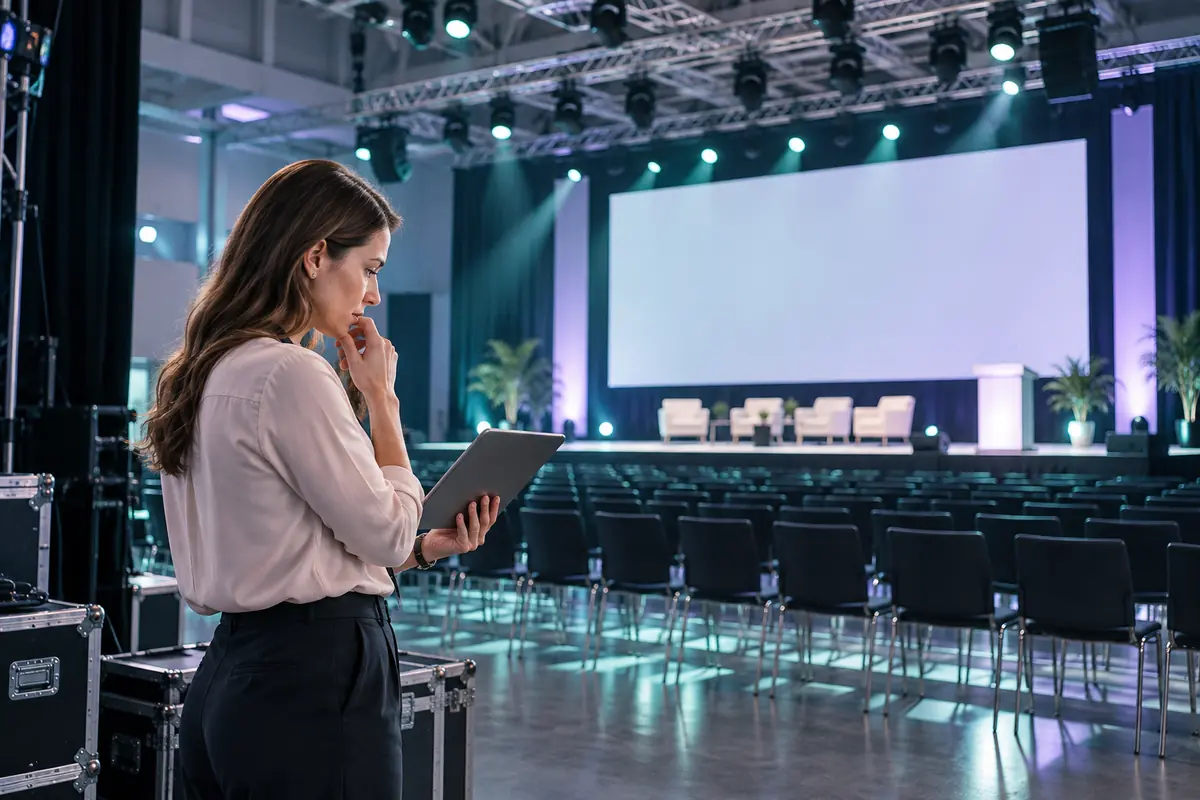
At Eventscase, we have been making this point for some time: narrative is what turns an event into something memorable, more than any isolated production element. A strong thread running through the event, a story, a question answered over the course of the day or a real problem gradually explored session by session gives meaning to every moment of impact you decide to include. Without that thread, the moment simply sits on its own, like a scene without a film around it.
Designing for the aha without giving up the wow
None of this means removing production or abandoning spending on moments designed to impress. It means deciding carefully where that budget goes and why.
A well-balanced event budget is not necessarily one that spends the most on production — or the least. It is one that directs resources towards the moments that genuinely connect with what attendees came looking for, while using moments of impact to reinforce the content rather than replace it.
Understanding which moments matter requires something many event teams still do not collect: real data on which sessions generate the most interaction, which subjects keep appearing in conversations during the coffee break and which parts of the event people simply do not want to miss.
Tools such as Eventscase’s Event App and Check-in App are designed to help capture that evidence while the event is happening, rather than trying to reconstruct it afterwards through a satisfaction survey that few people answer with complete candour.
The same pattern appears among organisers who create events people are still talking about months later: they start with the attendee’s real problem, build the content around it and let production highlight the moments when that content reaches its peak. Not the other way around.
There is a simple way to check whether an event is properly balanced before it even begins. Go through it session by session and ask yourself what an attendee will be able to repeat the following day without consulting their notes.
If the answer is, “They were blown away by the entrance,” you have a wow moment that will work brilliantly in the room and then disappear. If the answer includes an idea, a figure or a different way of solving a problem they already had before arriving, you have an aha.
The realistic goal is not to choose between the two. It is to make sure the event budget does not stop at the first.
Where this is heading
The next time you design an event, before deciding how much of the budget should go into production, it is worth asking a more uncomfortable question than any aesthetic one: if you remove the stage, the lights and the surprise entrance, what does the attendee still have to take back to their organisation?
If the answer takes too long to appear, the problem probably is not the production bill. It is what that production is being asked to replace.
For some time, the events industry has been moving away from spectacle designed to be photographed and towards content designed to be remembered. And all the signs suggest that, in the events ahead, the question will no longer be how much wow you created, but how many attendees came back because they understood something that was genuinely useful to them.